

You know you need high-reliability electronics, but your decision matters: Should you stick to a finalised drawing or co-develop the product based on a specification?
Meanwhile, the global defense electronics market hit USD 176.81 billion in 2024 and will grow to USD 290.19 billion by 2034, expanding at a CAGR of 5.08%. If you choose the wrong manufacturing approach, you risk delays, budget overruns, and compliance failures. These risks are unacceptable when field readiness depends on your system’s performance.
In this article, we’ll clearly define Built-to-Print vs Built-to-Spec, explore where each approach excels, and help you determine the right model for your mission-critical electronics project.
Table of Content
Key Differences of Built-to-Print vs. Built-to-Spec:
| Aspect | Built-to-Print | Built-to-Spec |
| Ownership of Design | Customer provides a complete, finalised design and documentation. | Customer provides performance specifications; manufacturer handles design |
| Engineering Involvement | Minimal. The manufacturer executes as per the drawing and specs provided by the customer. | High. The manufacturer co-develops the design to meet requirements. |
| Flexibility | Low changes require few design revisions from the customer. | High design evolves collaboratively to meet functional goals. |
| Risk Distribution | Customer assumes most design risk. | The manufacturer shares or owns design risk, including the cost of revisions, field issues, and repairs. |
| Speed to Production | Faster if the design is mature and stable. | Slower upfront but optimized for complex or evolving needs. |
| Cost Implications | Lower NRE (non-recurring engineering) costs; fixed BOM. | Higher NRE due to custom development, but may optimize lifecycle cost. |
| Best Fit For | Repeat builds, legacy systems, stable designs. | New product development, R&D programs, and high-complexity systems. |
What is Built-to-Print?
Built-to-Print is a manufacturing model where the customer supplies complete design documentation, schematics, drawings, and BOM, and the manufacturer produces exactly to those specifications without altering the design. It’s a precision-execution model ideal for mature, validated products where consistency and repeatability are critical.

Ideal For
- Legacy defense systems with established designs
- Repeat production of fielded equipment
- Customers with in-house engineering resources
- Programs requiring strict IP control
Key Capabilities
- PCB and system assembly to exact customer drawings
- BOM validation and sourcing
- Wire harnessing, cabinet integration, and mechanical sub-assembly
- Manufacturing to IPC-A-610/620 and MIL-STD-461 compliance
- Final inspection, testing, and documentation per customer protocol
Benefits of Built-to-Print
- Predictable lead times and costs
- Full customer control over design/IP
- Faster transition to production
- Easier quality assurance through well-defined specifications
- long-life programs with minimal change tolerance
What is Built-to-Spec?
Built-to-Spec is a collaborative manufacturing model where the customer defines performance, environmental, and functional requirements, and the manufacturer designs, builds, and validates the product to meet those specifications. This model enables design innovation, system integration, faster time-to-market, and engineering ownership, ideal for complex or first-of-its-kind defense applications.
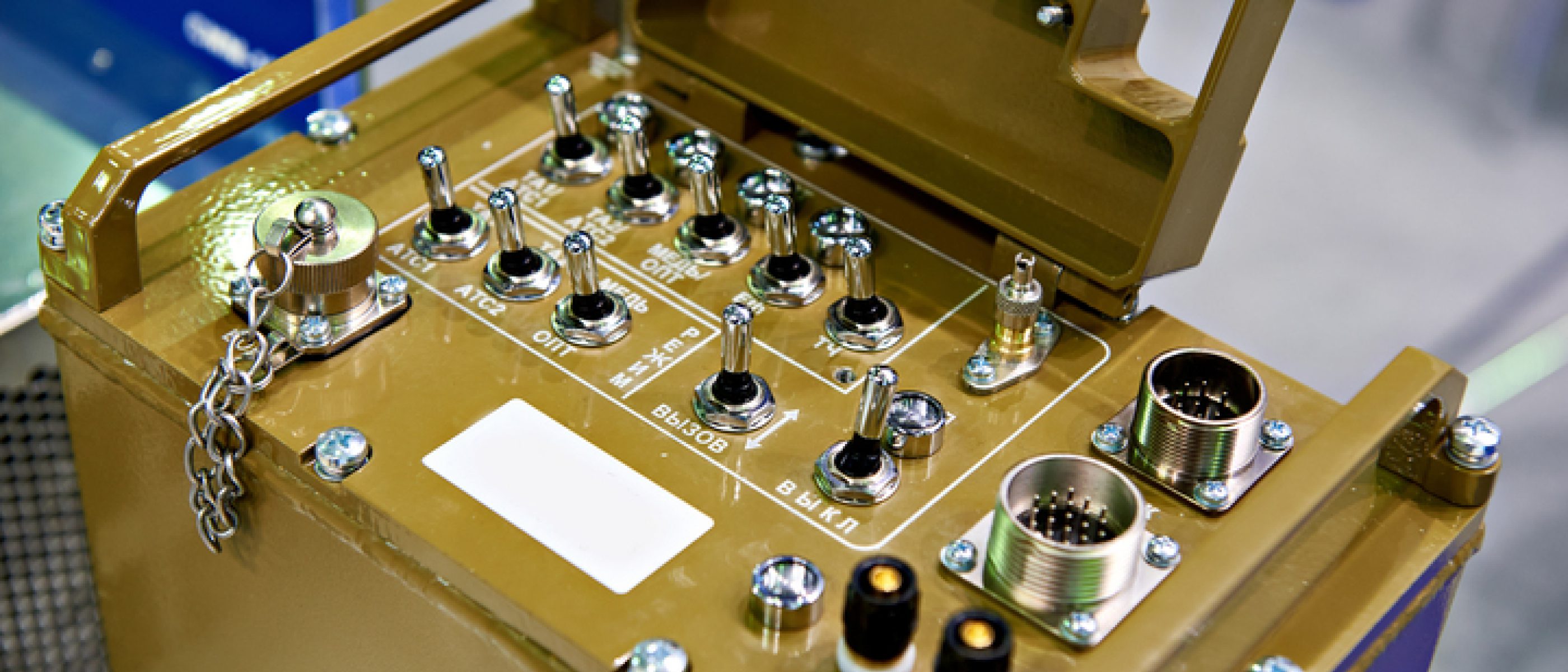
Ideal For
- New or evolving system architectures
- R&D-heavy programs and prototyping
- Defense platforms requiring system-level integration
- Customers lacking detailed design resources
Key Capabilities
- Requirements analysis and system design
- Schematic capture, PCB layout, and mechanical design
- Thermal, EMI/EMC, and stress tolerance engineering
- Design validation and iterative prototyping
- Full MIL-STD testing and qualification support
Benefits of Built-to-Spec
- Design flexibility and innovation from concept to product
- The manufacturer shares design responsibility and risk
- Optimized for harsh environment readiness and compliance
- Enables quick-turn development for emerging technologies
- Reduces internal engineering burden for customers
Which Model is Right for Your Project?
Your choice between Built-to-Print and Built-to-Spec comes down to 3 essentials:
- design ownership,
- project complexity, and
- engineering involvement.
Ask yourself
- Is your design finalized, or still in development?
- Do you need compliance support or environmental hardening?
- Is your internal team equipped to manage detailed design?
If you have a complete, validated design and need fast, consistent production, Built-to-Print delivers speed, control, and cost certainty.
If your program is still evolving, involves custom requirements, or demands deep technical input, Built-to-Spec offers design flexibility, risk-sharing, and system-level engineering support.
Choosing the right model means more than picking a path; it’s about aligning your manufacturing strategy with mission needs.
Why MicroLOGIX is the Ideal Partner
MicroLOGIX brings 25+ years of defense electronics expertise, supporting both Built-to-Print and Built-to-Spec models with precision and flexibility. Explore our defense capabilities.
For Built-to-Print
- Exact execution of your drawings and BOM
- IPC-A-610/620 and MIL-STD-461x compliance
- Consistent quality across systems and builds
For Built-to-Spec
- Co-development from spec to rugged design
- Expertise in EMI/EMC, thermal, and mechanical engineering
- Full MIL-grade testing and validation
Why it matters
- AS9100:2016 certified
- In-house ESS, quick-turn prototyping, and complex PCB builds
- Proven performance across land, sea, and air systems
Whichever model you choose, MicroLOGIX gives you the engineering insight, manufacturing discipline, and defense-grade quality to get it right on time. Contact us to get started
FAQs
1. Can I switch from Built-to-Spec to Built-to-Print later on?
Yes, absolutely. Many teams use Built-to-Spec for the development phase, then shift to Built-to-Print once the design is finalized for production.
2. Does Built-to-Spec take longer?
It can take a bit longer up front because we’re co-developing the design. But it often saves time (and rework) later, especially if the requirements are complex or still evolving.
3. How do I know which model fits my project best?
If I already have detailed drawings and I’m confident in my design, Built-to-Print is a solid choice. But if I’m still shaping the solution or need engineering input, Built-to-Spec is the way to go.