

Table of Content
Introduction: Why Embedded & IoT Design Trends Matter in 2025
Electronics drive innovation in defence, healthcare, automotive, and industrial automation. At the core of this transformation are embedded systems and IoT hardware.
India’s electronics industry is booming. With government programs like Make in India and PLI schemes, it is set to cross $100 billion by 2025. This creates huge opportunities but also new design challenges.
To stay competitive, companies must follow the latest embedded and IoT design trends. This blog explores the top ones for 2025 and shows how MicroLOGIX helps businesses design, build, and launch smarter products.
Trend 1: Low-Power IoT Devices
Battery life remains the biggest challenge in IoT. Devices like wearables, trackers, and sensors often run where charging is not practical.
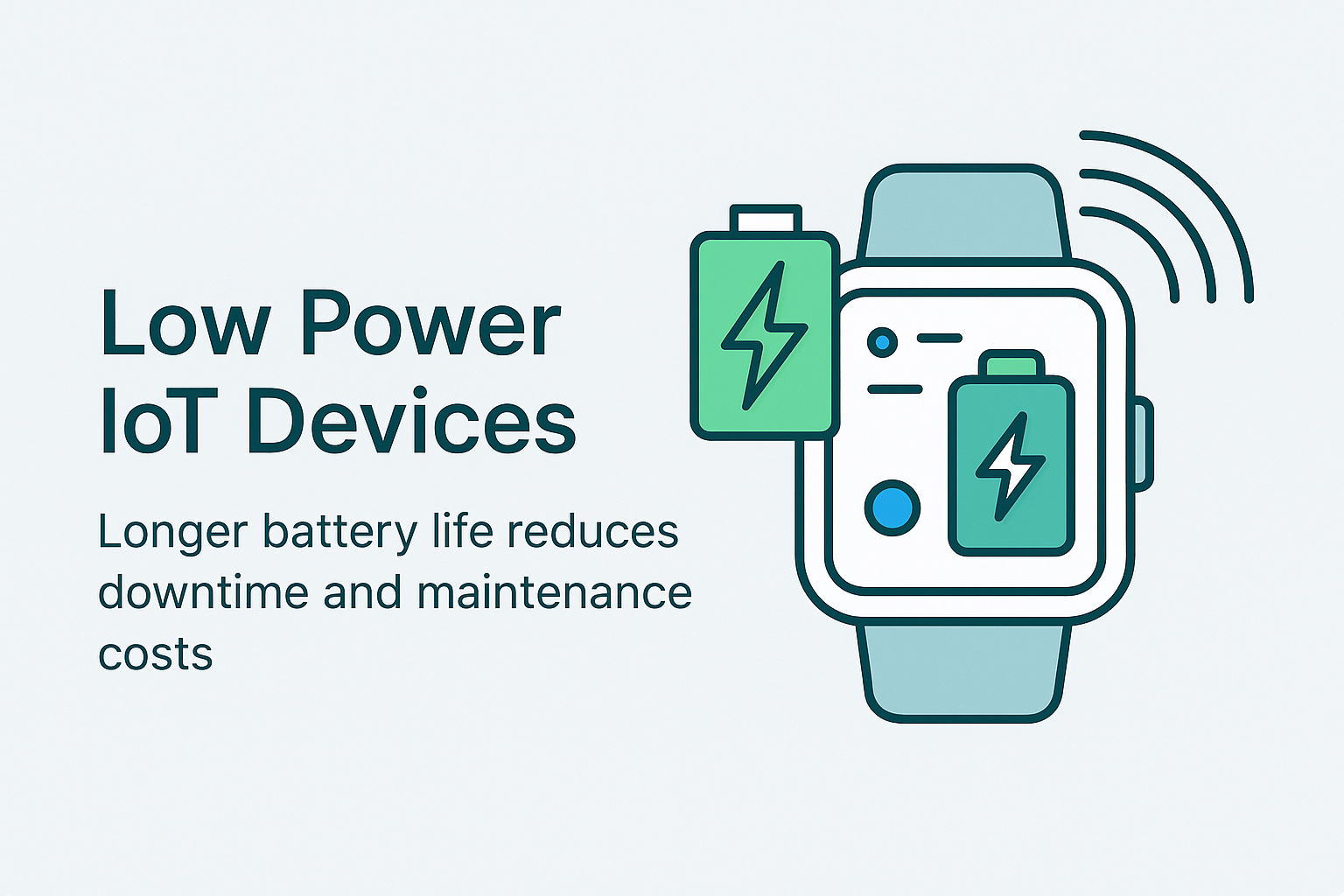
Why it matters:
- Longer battery life means less downtime, Lower Costs, and reduced damage to the environment
- Smaller batteries allow lighter designs
- Lower energy use cuts costs
Design strategies:
- Low-power ARM microcontrollers (MCUs)
- Optimized PCB layouts
- Firmware with sleep modes
- Bluetooth and WiFi interfaces to communicate Battery charge levels
MicroLOGIX: Our Remote Monitor & Tracker uses ultra-low-power circuits. It delivers longer uptime and reduces costs for clients in logistics and industrial monitoring.
Trend 2: Edge Computing & AIoT
Edge computing is the practice of processing data on IoT devices instead of sending it all to the cloud.

Why it matters:
- Faster response times
- Reduced bandwidth costs
- Improved security
MicroLOGIX: Our combined hardware and software design expertise allows us to integrate AI chips directly into PCBs. This creates faster, smarter IoT devices.
Trend 3: Hardware Security
Hardware-level security means protecting IoT devices from hacking, not just through software.

Techniques include:
- Secure boot to block tampered firmware
- Encrypted processors
- Tamper-resistant PCB designs
Industries that rely on it: Defence and Aerospace, industrial, and healthcare.
Compliance standards: CE, UL, RoHS, BIS, and defence-grade MIL-STD-461.
MicroLOGIX approach: We build devices with hardware security and help clients achieve international certifications.
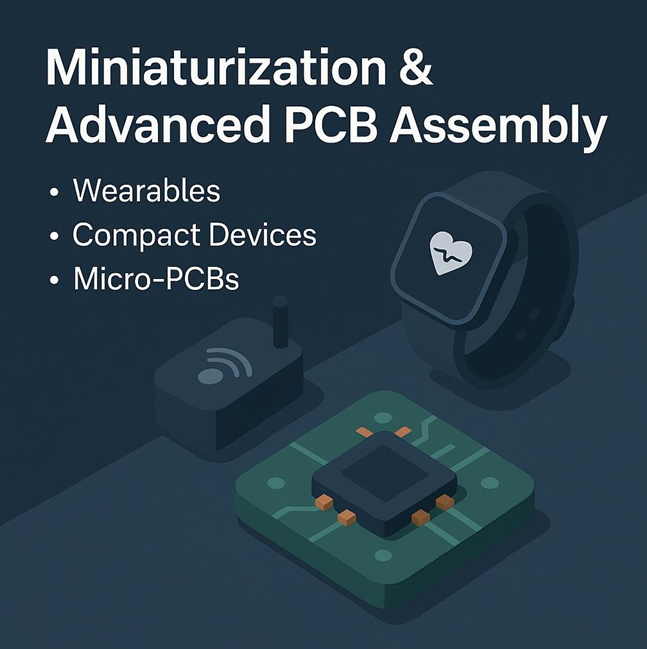
Trend 4: Miniaturization & Advanced PCB Assembly
Electronics products are shrinking while demand for performance grows. From fitness trackers to defence systems, miniaturization is key to drive material quantity and cost reductions.
Key advances:
- High-density (HDI) PCBs
- Flexible circuits
- Micro-PCBs for medical devices
Challenges: Smaller devices require precision assembly and advanced inspection, like AOI, X-Ray, and testing.
MicroLOGIX capability:
- SMT lines for fine-pitch parts
- AOI and X-Ray testing for BGA and CSP Packages
- BGA rework for complex boards when needed. We also provide rework as a service.
Trend 5: Sustainable Electronics
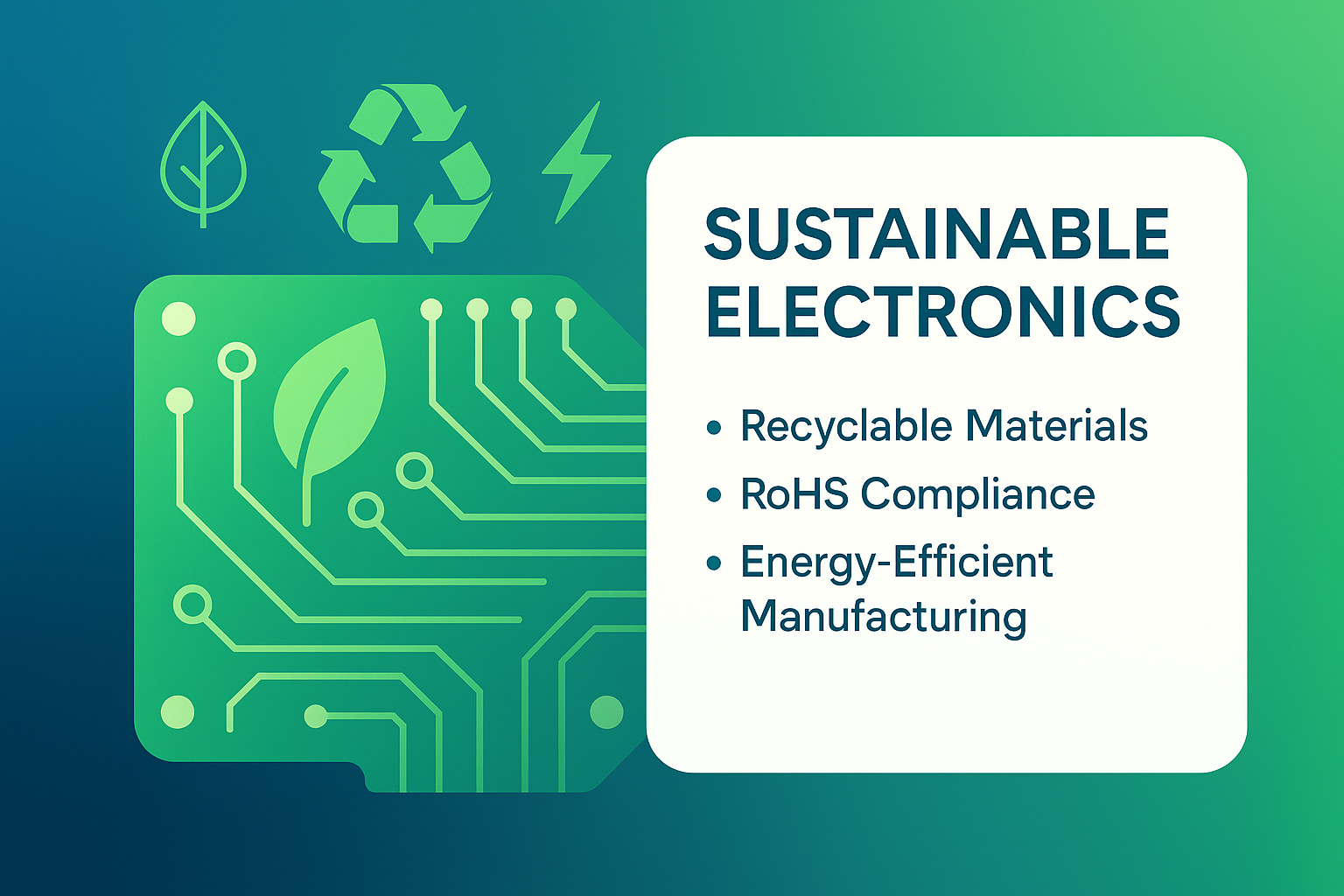
Sustainability is now a priority in electronics manufacturing to minimise the damage to the environment and reduce the materials usage and natural resources.
Practices include:
- Recyclable materials like components and packaging materials
- Lead-free solder (RoHS compliant)
- Energy-efficient assembly lines
- Low Water and PCB Cleaning Agent Consumption
Why it matters:
- Meets RoHS and ISO 14001 standards
- Builds brand trust
- Reduces waste costs
MicroLOGIX promise: Our processes are RoHS-compliant and designed for eco-friendly manufacturing.
Trend 6: Faster Prototyping with Digital Twins
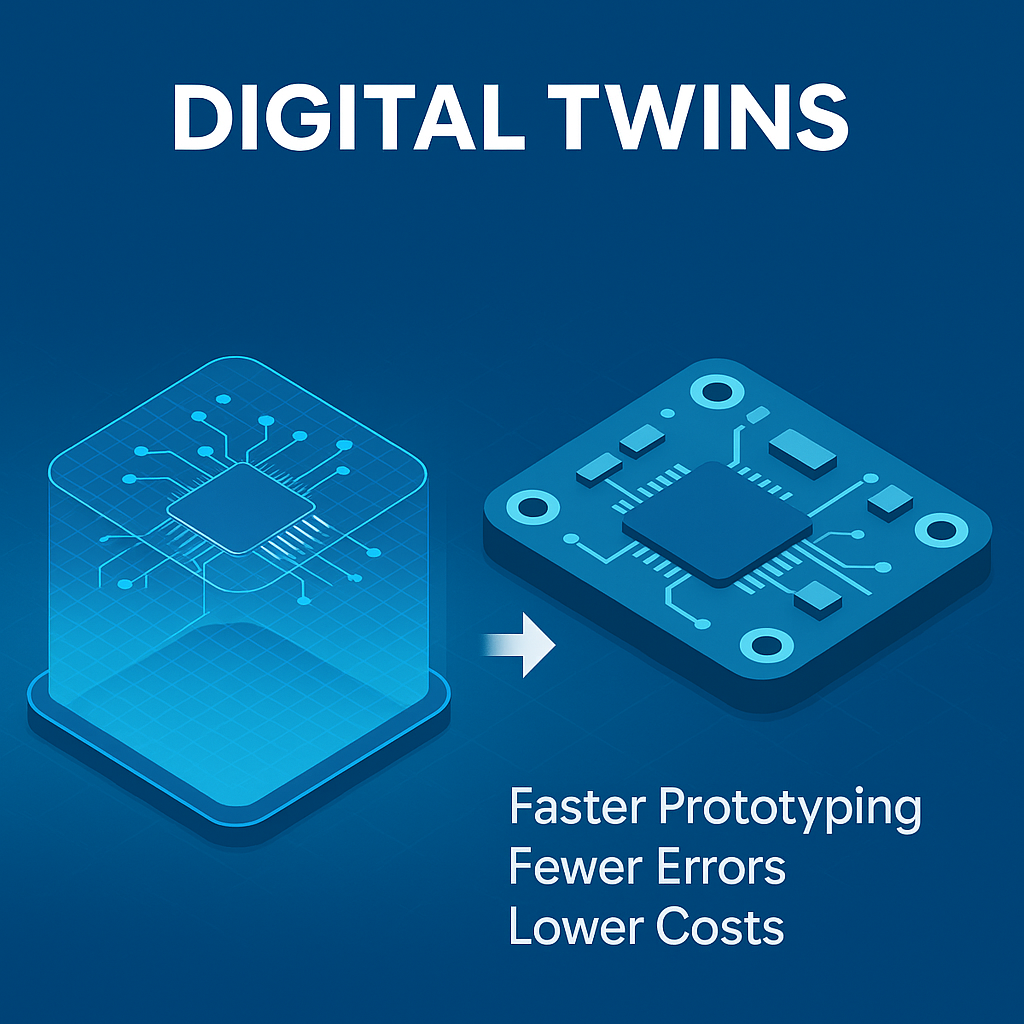
A digital twin is a virtual model of a physical product. Engineers use it to test designs before mass production.
Benefits:
- Fewer errors
- Lower costs
- Faster launches
MicroLOGIX service: We provide rapid prototyping and board bring-up so clients can test and refine designs quickly.
Bonus Trend: India’s Push for Semiconductor & Component Self-Reliance
India is investing in chip fabs and component plants. This move reduces reliance on imports.
Impact on IoT design:
- Lower costs
- Stable supply chains
- Faster production cycles
MicroLOGIX view: We combine local sourcing with global partnerships to ensure reliability.
Cloud vs Edge Computing in IoT
| Feature | Cloud Computing |
Edge Computing |
| Data Processing | Centralized in remote servers | Local on-device or near-site gateway |
| Latency | Higher due to the network round-trip | Very low, real-time responses |
| Bandwidth Use | High, continuous data transfer | Lower, only filtered data is sent to the cloud |
| Security | Data travels through networks → risks | More secure, less external exposure |
| Best For | Big data analytics, storage | Real-time apps (healthcare, EVs, factory) |
Decision Guide: Choosing the Right EMS Partner in India
India’s EMS & PCB Assembly Landscape
India is fast becoming a global hub for electronics manufacturing services (EMS). Key reasons include:
- Lower costs than Western countries
- Highly skilled engineers
- Government incentives and policies
Modern EMS providers go beyond assembly. They now handle design, prototyping, testing, and certification.
At MicroLOGIX, our services include:
- PCB assembly with advanced SMT machines
- Testing and inspection (AOI, X-Ray, BGA rework)
- Box build and integration
- Rapid prototyping for faster product launches
- Do they cover design→prototyping → certification?
- Do they use advanced tools(SMT, AOI, X-Ray, BGA rework)?
- Can they guarantee ISO, CE, RoHS, UL, and MIL-STD compliance?
- Do they serve multiple sectors (defence, healthcare, automotive, industrial)?
Why MicroLOGIX?
- End-to-enddesign+EMS
- Proven IoT products (trackers, PDUs, racksystems)
- Faster launches with compliance guaranteed
FAQs
Q1: What certifications are required for IoT devices in India?
A: Devices often need CE, UL, RoHS, BIS, and MIL-STD-461. These ensure safety and compliance in India and abroad.
Q2: What is hardware-level security in IoT?
A: It means securing devices at the chip and PCB level with features like secure boot, encryption, and tamper-proof designs.
Q3: How do EMS providers help with IoT prototyping?
A: EMS companies like MicroLOGIX handle design, assembly, testing, and certification, helping businesses launch products faster and with fewer errors.
Q4: How is PCB assembly evolving?
A: With HDI boards, SMT machines, AOI, and X-Ray inspection, manufacturers can now build smaller and more complex boards.
Q5: Why choose India for IoT manufacturing?
A: India offers skilled engineers, cost-effective EMS, global certifications, and government incentives.
Conclusion
2025 is about smarter, smaller, and more secure devices. From low-power trackers to defence-grade embedded systems, the future belongs to companies that adapt early.
At MicroLOGIX, we provide:
- Embedded system design (hardware + software)
- PCB assembly and EMS
- IoT products like trackers, PDUs, and rack systems
- Certification and compliance services
Ready to launch your next IoT product? Contact MicroLOGIX today for a free consultation.