
Your Vision, Our Technology
Wireless Multi-Sensor
Wireless Multi-Sensor for Industrial and Environmental Monitoring
A wireless multi-sensor should not require nine separate devices to cover nine separate measurements. MicroLOGIX’s Spider Zigbee wireless multi-sensor consolidates accelerometer, gyroscope, magnetometer, temperature, humidity, air quality, ambient light, Hall effect and MEMS microphone sensing into a single 60mm node. It runs on Sub-GHz Zigbee radio, holds power draw low enough for coin cell operation, and pushes readings to a cloud dashboard through a dedicated gateway.
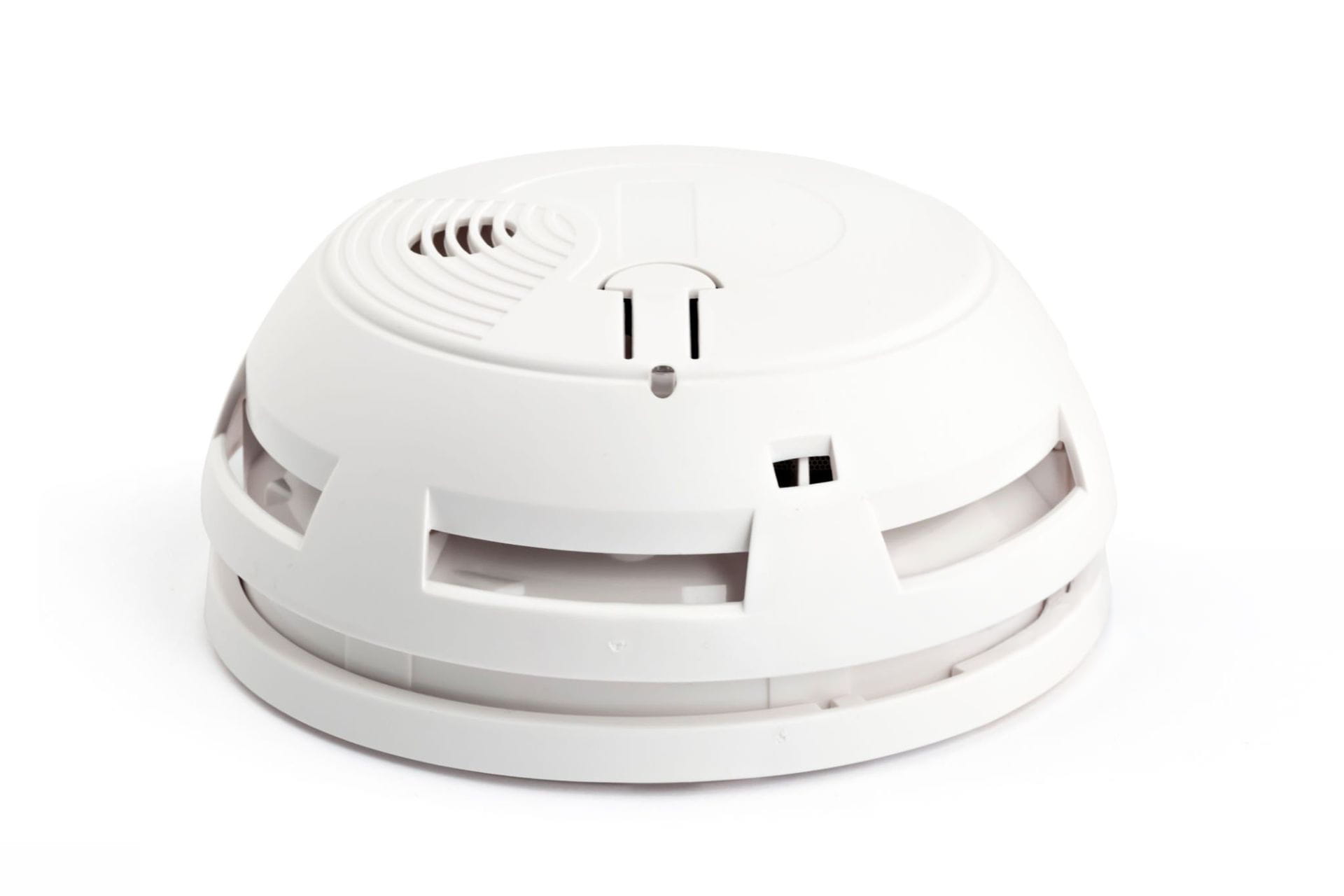
What the Spider Wireless Multi-Sensor Measures
One node, nine sensing types. That is the entire case for choosing a multi-sensor integrated system over stitching together separate point sensors, and it is worth stating plainly before the specification table backs it up.
| Sensor Type | Range | Accuracy |
|---|---|---|
| Accelerometer | ±16g | Not specified |
| Gyroscope | ±2000°/s | Not specified |
| Magnetometer | Not specified | Not specified |
| Temperature | -40°C to 150°C | 0.75°C |
| Humidity | 0 to 100% RH | 0.008% RH |
| Hall Effect Sensor | Not specified | Not specified |
| PIR (optional, separate enclosure) | 2¹⁴ to 511 counts | Not specified |
| UV / Ambient Light | Up to 128 KLX dynamic range | Less than 100 mlx resolution |
| Indoor Air Quality (eCO₂ / TVOC) |
eCO₂: 400 to 64,000 ppm; TVOC: 0 to 64,000 ppb |
0.18 Pa |
| MEMS Microphone | 90 dB | Not specified |
The six-axis accelerometer and gyroscope combination supports vibration monitoring and motion detection on rotating or moving equipment. The magnetometer supports true north sensing for compass applications. Where the datasheet does not list an accuracy figure, this page states that plainly rather than guessing a number. A wireless multi-sensor manufacturer’s credibility rests on the specification sheet matching the shipped product.
Wireless Network Architecture
A wireless multi-sensor network is only as reliable as its radio layer & its behavior when that radio layer drops. Spider addresses both.
Radio specification:
| Parameter | Value |
|---|---|
| Frequency Range | 868 MHz (Sub-GHz) |
| Output Power | +16 dBm |
| Receiver Sensitivity | -123 dBm at 1.2 kbps |
| Modulation Formats | 4-GFSK, 2FSK, 4FSK |
| Max Data Transfer Rate | 1250 kbps |
Sub-GHz Zigbee carries two practical advantages over 2.4 GHz mesh alternatives for industrial wireless monitoring deployments. It penetrates walls better. It draws less interference from Wi-Fi-congested spectrum.
That matters for multi-hop routing in wireless sensor networks. A signal has to cross plant floors, machine housings, or building partitions to reach a gateway rather than travelling in open air.
Connectivity does not end at the radio. Spider pushes data through a multi-interface gateway to a Google Cloud Platform backend, with email and SMS notifications configured through the web application’s User tab. If the gateway loses connection, the sensor node buffers data locally in 256 KB of flash memory rather than dropping readings. This separates a properly engineered wireless environmental sensor from a node that simply stops reporting during an outage.
For sites evaluating IoT long-range communication options generally: LoRaWAN sensors and Bluetooth-based sensor networks solve a similar problem through different trade-offs (LoRaWAN for very long range at very low data rates, Bluetooth for short range at higher bandwidth). Spider’s Sub-GHz Zigbee sits between the two, built for mid-range industrial and building environments rather than either extreme.
Power Options Built for Field Deployment
Field engineers select the power source at order time based on install duration and access constraints. All three options draw from the same low-power sensor design.
A battery-powered sensor on a coin cell suits short-cycle or hard-to-access deployments where a technician cannot return often to swap power. The rechargeable Li-Ion option suits longer continuous monitoring where periodic recharge is feasible. USB power suits fixed installations near existing infrastructure. The unit operates across -20°C to +85°C, which covers most indoor industrial and building environments without additional environmental protection for the electronics.
| Power Source | Specification |
|---|---|
| Coin Cell Battery | 3.6 V, 560 mAh |
| Li-Ion Battery | Rechargeable, 1000 mAh |
| USB | 5V external power |
Enclosure and Mounting
A battery-powered sensor on a coin cell suits short-cycle or hard-to-access deployments where a technician cannot return often to swap power. The rechargeable Li-Ion option suits longer continuous monitoring where periodic recharge is feasible. USB power suits fixed installations near existing infrastructure. The unit operates across -20°C to +85°C, which covers most indoor industrial and building environments without additional environmental protection for the electronics.
| Attribute | Specification |
|---|---|
| Dimension | 60mm dia x 20mm thick |
| Material | Polypropylene (PP), IP54 ABS enclosure |
| Mounting | Magnet, Velcro, 3M adhesive tape |
Where a Wireless Multi-Sensor Fits
Home and building automation, wireless sensor networks generally, alarm and security, lighting control, medical, remote controls, machine monitoring, sports and fitness equipment, and asset monitoring or tracking. Nine listed applications, each drawing on a different combination of the sensor stack above rather than the full nine sensors at once.
Machine monitoring draws on the accelerometer and gyroscope for vibration and motion trend tracking. Building automation and alarm and security draw on the PIR and Hall effect sensing. Medical use draws on the environmental sensor set (temperature, humidity, air quality) for controlled-environment monitoring. This page states the application category as listed on the product datasheet; it does not claim a specific verified deployment in any of these sectors unless MicroLOGIX confirms one for direct citation.
The Web Application: Where Sensor Data Becomes a Decision
A sensor that measures nine parameters is only useful if the data reaches the right person before a problem escalates. Spider’s web application handles that translation.
The dashboard’s Analytics tab graphs live and historical readings per gateway and sensor node. The Gateways tab manages multiple gateways from one login, useful for sites running more than one building or production line on the same account. Sensor Node Configuration splits into four tabs:

Global
Naming and identification

Power
Source type and low-battery cutoff threshold
Radio
Frequency band, TX power, performance mode, data rate.
Sensors
which of the nine sensing types are active on that node
Why MicroLOGIX Manufactures This
MicroLOGIX designs and assembles its wireless sensor hardware assembly in-house at its Peenya, Bangalore, facility, rather than reselling a third-party reference design. The bare PCB (both top and bottom layers) is part of MicroLOGIX’s own PCBA output, not an outsourced module dropped into a housing.
This matters for anyone sourcing a wireless multi-sensor manufacturer for volume deployment: design changes, firmware design updates, and sensor configuration changes route through the same team that built the board, without a middleman reseller in between.
MicroLOGIX holds ISO 9001, IATF 16949, AS9100D, ISO 13485, ISO 14001, CE, UL, MIL-STD-461 and IPC certifications at the company level, covering its manufacturing and quality management systems. This page does not claim those certifications apply to a specific compliance test result for the Spider product line itself. Buyers requiring product-level compliance documentation for a specific sector should confirm scope directly.
Frequently Asked Questions
Nine sensing types are in the standard configuration: accelerometer, gyroscope, magnetometer, temperature, humidity, Hall effect, UV/ambient light, indoor air quality (eCO₂ and TVOC), and MEMS microphone. PIR sensing is available as an option in a separate enclosure.
The datasheet specifies a receiver sensitivity of -123 dBm at 1.2 kbps and an output power of +16 dBm on 868 MHz sub-GHz Zigbee. Sub-GHz radio generally penetrates walls and building materials better than 2.4 GHz alternatives, though actual range depends on the installation environment and is not stated as a fixed metre figure on the datasheet.
Yes. The customer selects one power source at order time: a 3.6V coin cell battery (560 mAh), a rechargeable Li-ion battery (1000 mAh), or 5V USB power.
The sensor node includes 256KB of flash memory that stores sensed parameters locally during a gateway disconnection, so readings are not lost while connectivity is restored.
Medical is listed among the product's stated applications. The same architecture (sensor node, gateway, Google Cloud Platform backend, alert notification) applies to a wireless sensor-based healthcare monitoring system, though this page does not cite a specific verified healthcare deployment.
Tell Us About Your Product Needs
Request a Sensor Configuration Assessment
A wireless multi-sensor deployment works best when the sensor mix, power source and mounting method match the actual site before the order is placed. Submit deployment details for a configuration review matched to the environment, sensor requirements and gateway count involved.